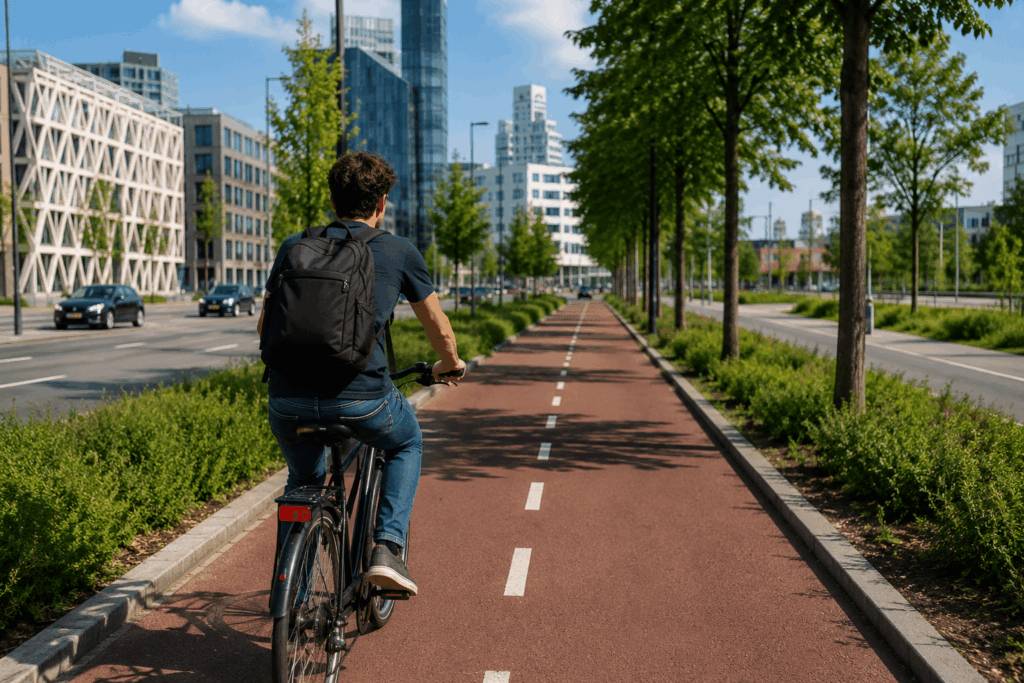
Living and Working as a Technical Professional in Eindhoven
Taking a technical job in Eindhoven doesn’t just mean a new job – it means settling into a new city too. Here’s what daily life actually looks like.
Read more

 English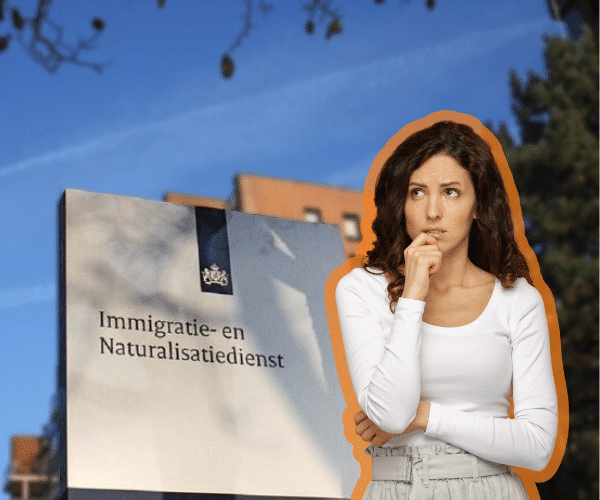
We, EU-People, get a lot of questions about work permits in the Netherlands. When do you need one and how do you get it? How long does it take? In this blog we answer all these questions and more, all based on the high-quality information from the Netherlands Immigration and Naturalisation Service (IND).
You need a work permit if you do not have the nationality of one of the countries below in order to work in the Netherlands.
(Belgium, Bulgaria, Cyprus, Denmark, Germany, Estonia, Finland, France, Greece, Hungary, Ireland, Italy, Latvia, Lithuania, Luxembourg, Malta, Netherlands, Austria, Poland, Portugal, Romania, Slovenia, Slovakia, Spain, Czechia, and Sweden.), Member States of the European Economic Area (EEA) (Iceland, Liechtenstein and Norway) in Switzerland.
There are several ways to apply for a Dutch work permit and for detailed information we refer you to the IND website.
Are you highly educated? Then apply directly for a suitable job at a Dutch company, and if the company is recognized by the IND, it can apply for a work permit for you. You must be exceptionally skilled to be eligible for work. Examples of highly skilled migrants are (guest) lecturers, (scientific) researchers, and physicians in training.
Highly skilled workers from outside the EU, EEA, or Switzerland may be eligible for an EU Blue Card. With an EU Blue Card, you are allowed to work without a work permit for the employer that arranged a residence permit for you. In addition, you are allowed to work as a self-employed person. The requirements for the European Blue Card can be found on the IND website.
Aruba, Curaçao, Sint Maarten + Bonaire, Saba and Sint Eustatius), Norway, Austria, Poland, Portugal (incl. the Azores and Madeira), Romania, Slovenia, Slovakia, Spain (incl. the Balearic Islands and the Canary Islands), the Czech Republic, Iceland and Sweden.
Are you planning to work in the agricultural sector for a maximum of 24 weeks? You or your employer can apply for a combined work and residence permit for a season (also known as a combined permit). For more information on this subject, we refer you to this page of the IND website.
Once your form has been submitted and you have paid the fees, the IND will process your application. By law, the IND is allowed up to 90 days to finalize your application. However, you can check the progress of your application by calling the IND (+31 88 0430 430) between 9:00 AM and 5:00 PM, Monday through Friday. If your application is approved, you or your employer will receive a confirmation letter.
Due to the high speed of our recruitment process, we cannot help you obtain a Dutch work permit. At EU-People, we work with a high vacancy turnover rate. As soon as we receive a request for employees, we aim to fill the vacancy within about a week. Therefore, we cannot wait for the statutory processing time of the IND (90 days). If you have a special skill or high level of education, please apply directly to a Dutch company in your field. You can also try to find seasonal work at a company or agency active in the agricultural sector.
Applying for a work permit involves fees. You or your employer pay the IND directly (depending on the situation). PLEASE NOTE, some scammers may offer you a Dutch work permit if you pay them a (large) amount of money. Do not trust them! They are illegal and It is impossible to obtain a valid Dutch work permit simply by paying money.
People with a nationality from outside the EU, EEA or Switzerland need a permit to be allowed to work in the Netherlands. There are many ways to get a Dutch work permit, for example to work as a highly skilled migrant or to obtain a European Blue Card, or to perform seasonal labor in agriculture. Once the application has been submitted and the processing fees have been paid, the IND has a statutory response time of a maximum of 90 days. Beware of pay-for-permit schemes! It is impossible to get a legal Dutch work permit by simply paying money.
Taking a technical job in Eindhoven doesn’t just mean a new job – it means settling into a new city too. Here’s what daily life actually looks like.
Read more

A lot of people rule themselves out of technical work before they even apply, because they assume you need a certificate, a Dutch diploma, or years of experience to get started. For most of the technical roles we place, that’s simply not true.
Read more
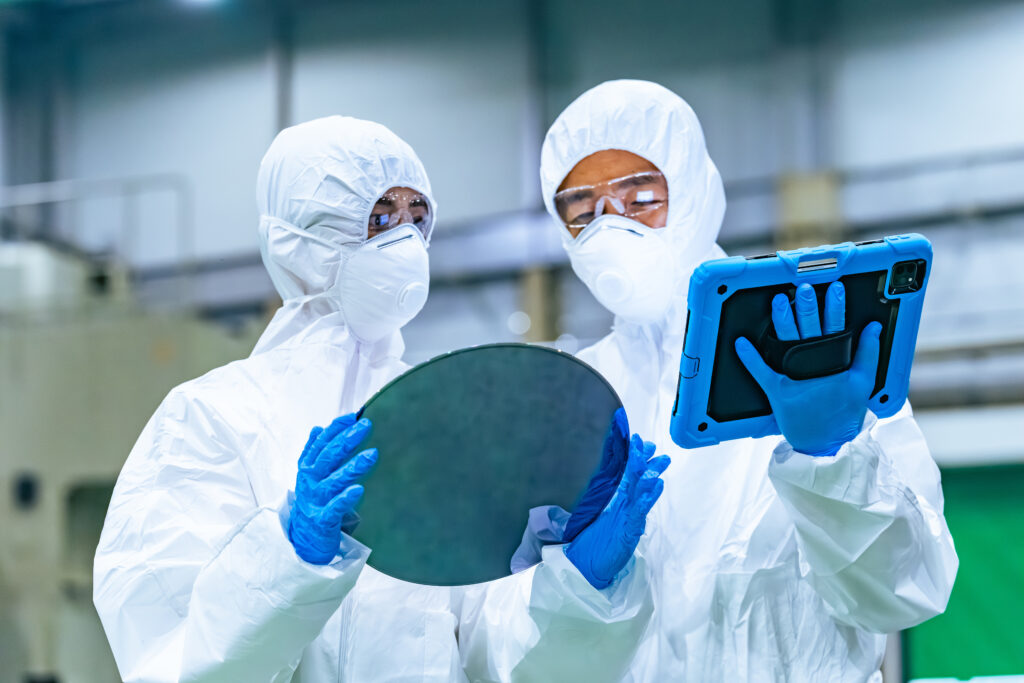
If you’ve been browsing technical vacancies in the Netherlands, you’ve probably noticed how many of them are in and around Eindhoven. Why Eindhoven Has So Many Technical Jobs Right Now is a question with an answer rooted in the remarkable growth of this city.
Read more
 Dutch Dutch
  Polish
 English
 Romanian
 Bulgarian
 Portuguese